




09 Mai Why Solscan Still Feels Like the Go-To Solana Explorer
Whoa!
Solana moves fast. Transactions pile up in blocks so quickly that a good explorer becomes essential. Users need something that surfaces transfer details, token metadata, and program logs without making you hunt around. Initially I thought all explorers were roughly the same, but then I dug into what actually matters for day-to-day troubleshooting and portfolio checks—there’s a clear difference. The UX and feature set can save you minutes or cost you a lot of gas-equivalent time when you’re debugging complex on-chain interactions.
Okay, so check this out—
Solscan is often the first stop when folks want a clean readout of transactions and token activity. It shows transaction signatures, slot numbers, fee breakdowns, and inner instructions in a way that’s fairly readable. Many dashboards hide inner instructions or make logs cryptic, though Solscan surfaces them so you can follow what programs did during execution, which helps when you’re tracking a swap gone wrong. My instinct said that transparency in logs reduces time guessing why a transfer failed, and the raw logs plus decoded params usually tell the story.
Here’s the thing.
Token tracking is a core strength. You can search any SPL token by mint address and get supply, holders, historical transfers, and token distribution charts. That’s huge when you’re vetting a new project or just checking the provenance of an NFT collection. The token tracker pairs on-chain clarity with simple charts so you don’t have to bounce between trade UIs and analytics sites. It isn’t perfect—some metadata depends on off-chain hosts and that’ll occasionally be missing or stale—but overall it’s reliable enough for most users to trust when making quick decisions.
Hmm… somethin’ bugs me sometimes.
For serious debugging, program logs and parsed instructions matter more than pretty charts. Solscan offers decoded instruction views for common programs, and that makes unpacking failed transactions far less painful. On one hand, decoded views give you the high-level intent; on the other hand, you sometimes need the raw base64 logs to hunt down edge-case errors thrown by custom programs, and the UI could make switching between them smoother. Actually, wait—let me rephrase that: the tools are there, but the ergonomics of toggling and filtering could be better for power users who are triaging multiple failed txs.
Really?
Yes—really. Another underrated feature is the address activity feed. It lists incoming and outgoing transactions, token transfers, and program interactions with timestamps. For wallets with dozens of token mints, that stream makes it quick to scan for suspicious transfers or unexpected approvals. And the export or CSV options (when present) let analysts pull data into spreadsheets for deeper forensic checks—very handy when reconciling on-chain movements with off-chain records.
Some folks care a lot about NFT discovery, and Solscan’s NFT pages are useful despite occasional metadata gaps. The platform attempts to aggregate off-chain metadata and tie it to on-chain mint records, which helps collectors confirm rarity and provenance. The caveat is that when metadata hosts are down you get placeholders, so don’t assume an incomplete page means the NFT is broken—often it’s the host, not the chain. That nuance matters.
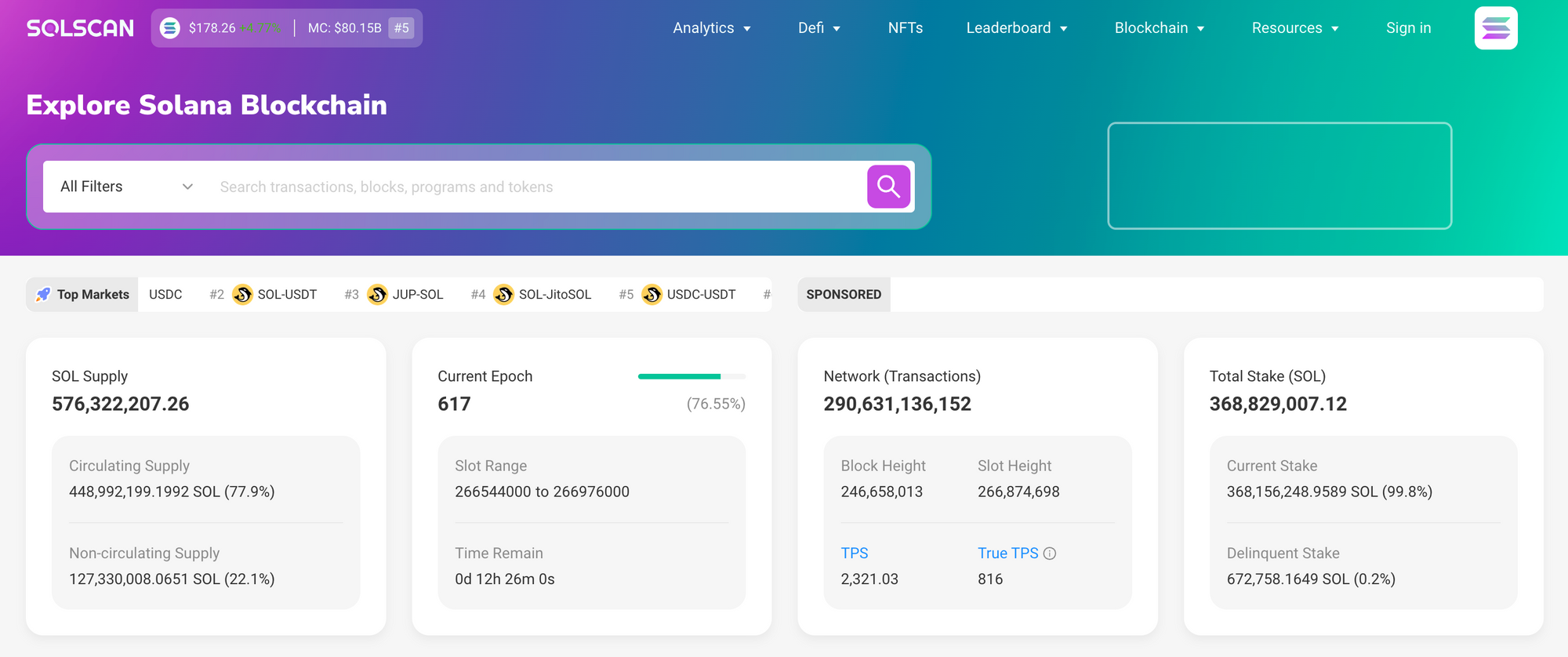
Where Solscan shines and where it could improve
Speed, clarity, and an emphasis on decoded instructions are clear wins. Search by tx signature and you can see program calls, pre/post balances, and inner instruction flows without extra plugins. For token tracking the holder lists and transfer histories are practical for quick audits. Security-wise, publicly accessible labels for known programs and exchanges reduce guesswork when you see unfamiliar transfers. But there are limitations: index delays during high load, occasional missing metadata, and the lack of a more advanced query language for power analytics—things that other on-chain data tools or direct RPC clients sometimes handle better.
I’ll be honest—
there’s a trade-off between a clean UI and super-powerful querying. Solscan leans toward usability, and that’s a deliberate choice. Most users want immediate answers: did my swap execute, how many tokens did I receive, who sent that payment? For those day-to-day questions it’s fast and intuitive. For heavy analytics, engineers still reach for data lakes or raw RPC logs and then run custom SQL, though Solscan can be a very useful starting point before you go that route.
Check this out—if you’re new to Solana or just want a straightforward explorer experience, the official Solscan reference page is a quick way to get oriented: https://sites.google.com/cryptowalletextensionus.com/solscan-explorer-official-site/
Now, some practical tips.
When debugging a failed transaction, copy the signature and inspect the program logs for “failed to” messages or rent-exemption issues. Compare pre- and post-balances to spot unexpected balance changes. Use the token tracker to confirm mint addresses—tokens with similar names can be spoofed. And watch inner instructions: what appears as a single transfer might be three nested program calls, and missing that detail will lead you down the wrong path.
Common questions
How do I trace a transaction that failed?
Search the transaction signature, then read the program logs and decoded instructions. Start with the error messages in logs and look at pre/post balances for affected accounts. If a program call looks unfamiliar, copy the program ID into the explorer to see labeled info or common use cases—sometimes the label tells you whether it’s a DEX router or a staking program.
Can I track token holders and transfers?
Yes. Use the token’s mint address to view supply stats, holder lists, and transfer history. For deeper analysis export the data if you need CSVs for reconciliation or external tools. Keep in mind that holder counts may change quickly on Solana, so snapshot timing affects any manual reporting you do.
Is Solscan the only explorer I should use?
No. It’s a strong default for most tasks, but complement it with other explorers or direct RPC access for redundancy and specialized queries. Different explorers index data slightly differently, and cross-checking can reveal inconsistencies or delays during network spikes.
